Mie’s steel-framed buildings wrapped in concrete fireproofing, which is then cladded in steel to represent what is demonstrated of what is concealed. This is a symbolic congruence but basically ignores the concrete that is in the intermediate. Today the more likely case is a concrete frame maybe cladded by aluminium that is mimicking some other material.
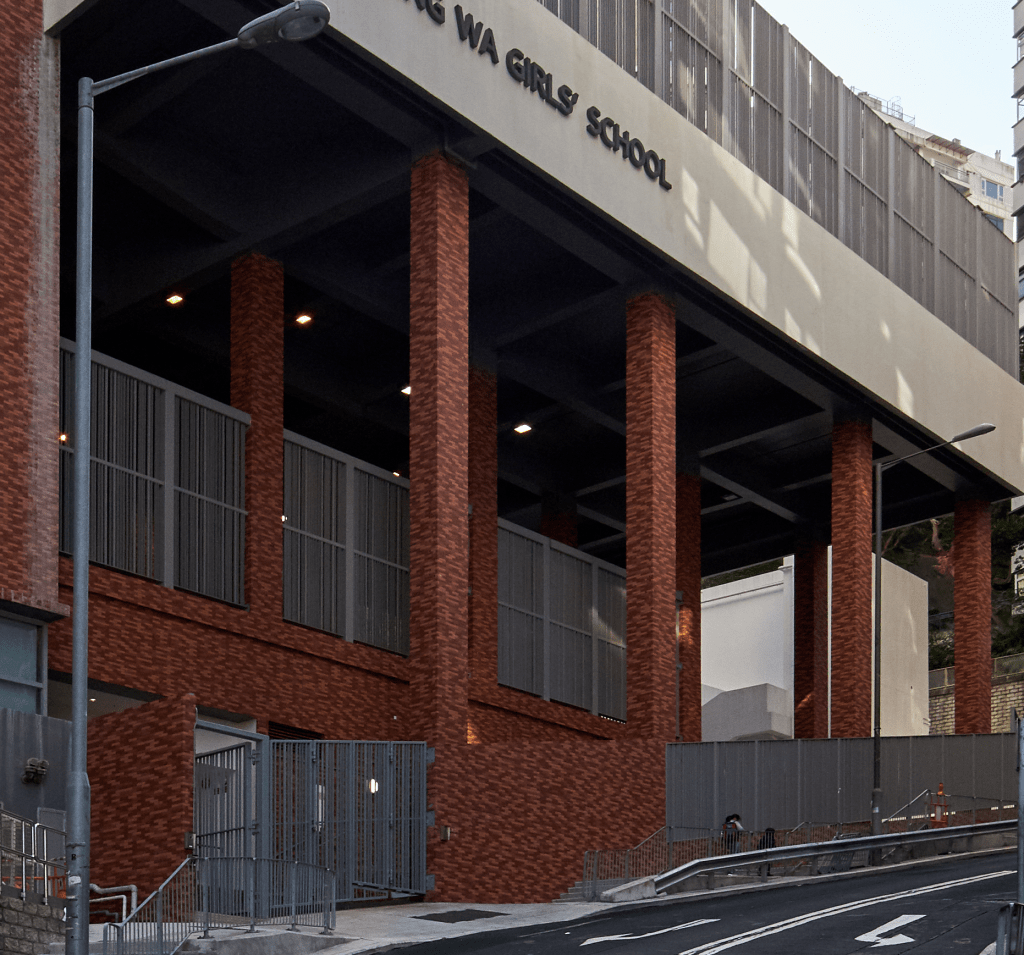
My hotel project is using aluminium in place of stainless steel that as aluminium is a cheaper and more resistant to color fading to stainless steel. Or perhaps that the surface material represents some history or aesthetic, as in brick cladded interior ‘Italian restaurant’ in an old tong lau shophouse in Wan Chai. A glaringly unarticulated relationship is the Ying Wa School at Mid-Levels, there are these 4 stories high, 800 x 800 columns cladded in brick, where its obvious to anyone bricks cannot form such high columns.
Ford then cites Peter Smithson, who attempted to codify these relationship of structure and cladding, in a 1962 article entitled “A Parallel of the Orders”, that a construction system becomes an order and then becomes a decoration:
‘The [Doric] Order is a form—metaphor of a once-actual structure… [William Bell] Dinsmoor uses the word ‘translation’ into stone of a wood and terracotta original, but this I suggest is an inadequate word to represent the process of change from a construction into an Order….A metaphor is an explaining, a magical exact showing-forth. It does not involve exaggeration or falsification.’
He then clarifies an order is not a ‘decoration’.
This declaration is not clear to differentiate between what is order and a decoration. Essentially the game is played for the cladding/detail to represent a metaphor, where the execution is more likely than not to be non-structural. Unless the logic of the original structure of which the metaphor is based on is followed, the metaphor cannot be transposed logically, hence the result projects some disjoint logic and strangeness such as the Ying Wa School.
The contemporary response is perhaps to get rid of ornament and decoration or maybe even any articulation of structure as perhaps, to use a metaphor of a human, there is no need to display our bones to understand that bones supports our day to day function. The architecture, as articulate by Koolhaas, can be built divorcing structure and facade; the so-called detail freed of any structural or symbolic baggage.
 bldg I blog